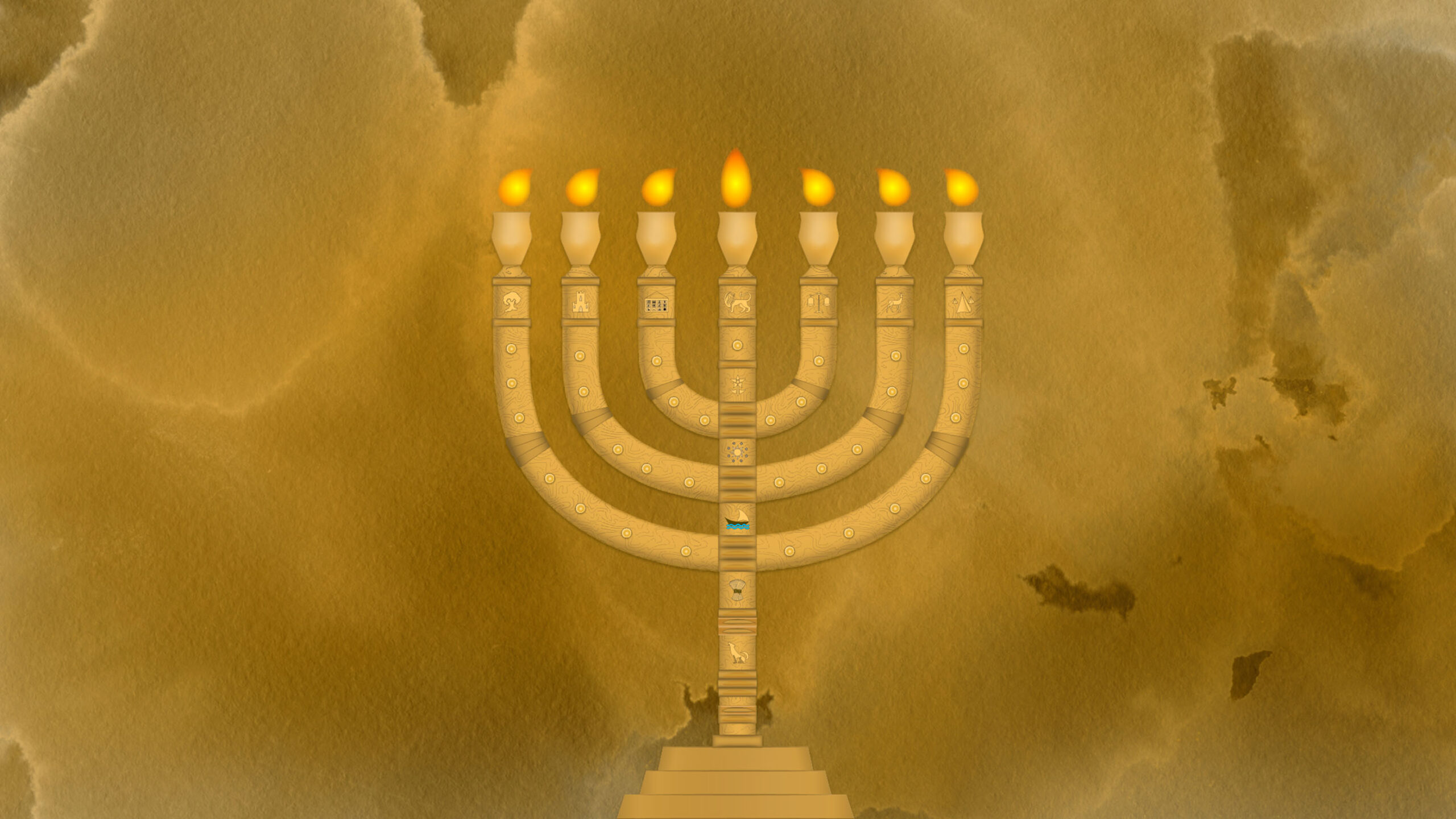
Feast of Dedication (John 10:22, NKJV)
Feast of Illumination (Babylonian Talmud Shabbot 21b)
The four books of Maccabees, 2 Maccabees 10: 1-9
The Complete 54 Book Apocrypha Literal Standard Edition (LSV)
Festival of Lights (Josephus, Antiquities of the Jews
Book 12 Ch. 6-7)
Hanukkah is not one of YaHaVahs’ commanded feast days, rather a Hebrew celebration of the re-dedication of the Temple.
It is more than just the telling of the war between the Jewish believers and the Syrian Greek Empire and their allies, the Hellenistic Jews. It is not about the founding of the Hasmonian Dynasty, which would rule from 164 BCE to 63 BCE. (The Hasmonian Dynasty is part of the key to Israel’s legal claim to the land today.)
It is the story of a small group of people who, in 167 BCE would not renounce YaHaVah. They fought against overwhelming odds to regain their freedom from Greek oppression and forced pagan worship.
This takes us to Gen. 1: 3-4 and the first day of Creation: “And YaHaVah said, let there be light: and there was light. And YaHaVah saw the light, that it was good and divided the light from the darkness.”
It is a story of light overcoming darkness. Not just the Rabbinic tradition of the miracle of the oil for the Temple Menorah, more importantly;
The preservation of the line of the pure seed.
Why was the line of the Pure Seed endangered?
By 323 BCE Alexander the Great had added the Persian empire, from Egypt to India, to the Greek empire and was the ruler of most of the known world. (including Israel)
Alexander would introduce a small settlement of Greeks into the cities he conquered. Along with Greek political rule came the Hellenistic cultural influence including the worship of Greek gods.
A gymnasium would be built in the city. The gymnasium was the focal point of the process of assimilation of the conquered people, particularly the youth, into Greek culture.
It promoted a program of Hellenization that enticed many Jews to abandon Yah and the Torah in favor of worshiping the Greek gods. Many Jews embraced the Greek culture. They spoke Greek and adopted Greek social and religious customs. Young Jewish athletes went so far as to surgically cover the evidence of having been circumcised and thus abandoned the holy covenant.
This is the first mention of the Hellenistic Jews that, along with the gentiles, will have a large influence in changing the method of worship in the early congregations. We find that Paul addresses this in his communications with the seven early congregations ( churches).
With the death of Alexander, the Greek empire was divided into 4 kingdoms among his military commanders. This resulted in a northern kingdom that, in 175 BCE, would be ruled by Antiochus IV Epiphanes and would include Israel.
By 167 B.C.E, Antiochus had banned the practice of Judaism and defiled the Temple in Jerusalem by sacrificing pigs on the Temple altar. He sprinkled the blood of a sacrificed pig in the Holy of Holies and on the sacred Torah scrolls. He erected a statue of Zeus in the courtyard, opened the Temple to non-Jews and required all of the people in Israel to worship Zeus.
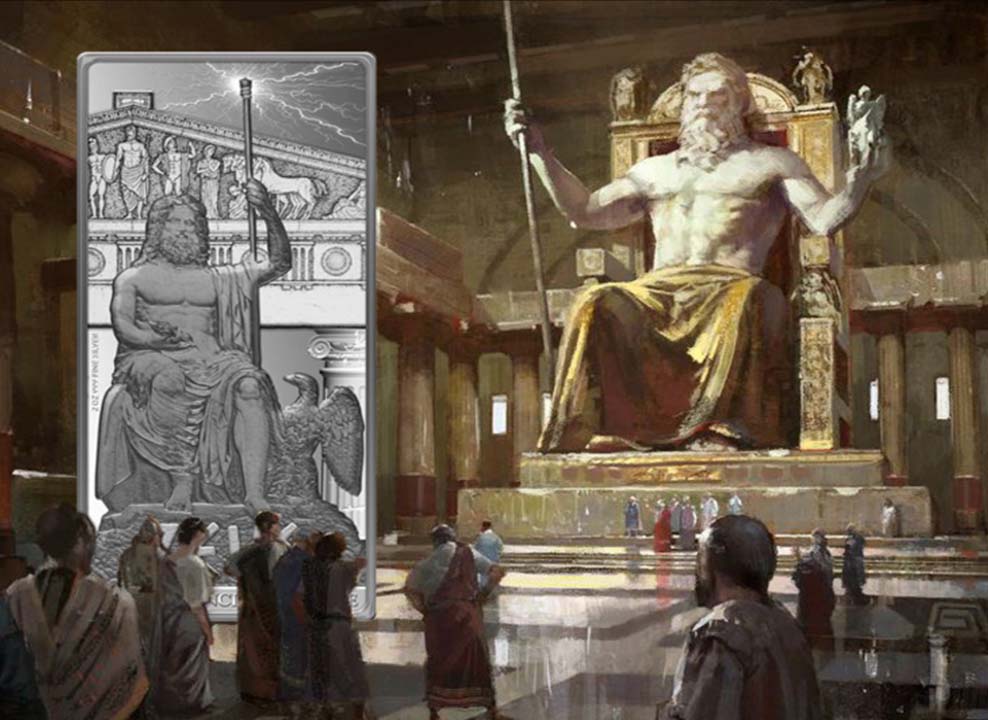
He declared the following to be punishable by torture and death: The study of Torah, eating kosher (refusing to eat pork), keeping the Sabbath, keeping YaHaVahs’ feast days, Circumcision, refusing to bow to Zeus and refusing to sacrifice to the Greek gods.
On the 25th day of each month those who had been found observing the laws of Elohim were sacrificed on the altar of holocausts. A holocaust was the Greek sacrifice, in which the victim is burnt up. Holocausts are intended to appease the spirits of the Underworld, including the spirits of the dead. Holocausts are conducted at night, and the sacrifice is offered on a low altar, with its head directed downwards.
Antiochus IV sent a royal decree throughout Judea that each city was to sacrifice a pig to Zeus on the Temple altar. He assigned a special military detachment (District Inspectors) to enforce this law.
The “District Inspectors” came to Modine and sought out Mattathias,a Jewish priest, to begin the sacrifice because he was a person of the greatest character among the people and that if he would sacrifice to Zeus the rest of the citizens would follow his example. Keep in mind that at this time they were under the Book of the Law. (Rabbinic Oral Torah} )
Mattathias refused, saying that he and his sons would not leave the worship of YaHaVah and the following of Torah.
A Hellenistic Jewish priest came and sacrificed the pig. Mattathias became so angry that he and his sons killed the priest, and all of the District Inspectors. He shouted for anyone that follows YaHaVah and the Torah to follow him. Many followed him into the desert with their wives and children and lived in caves.
The Greek army pursued them and attacked them on the Sabbath in their caves. They encountered no resistance from the Jews and burnt them alive in the caves killing about 1,000 along with their wives and children. Mattathias taught them to fight, even on Shabbat. This rule continues among the Jews to this day and was to save Israel during the 1973 Yom Kippur War.
In the 3rd year (165 B.C.E.) of the fight for freedom the Maccabees, with an army of 10,000, faced 60,000 Greek and Syrian soldiers. After two battles the Maccabees reclaimed Jerusalem.
The priests cleansed the Temple and removed the stones from the altar. They built a new altar, Temple Menorah, hung new curtains and rededicated the Temple 3 yrs. to the day, Kislev 25, from the time Antiochus IV defiled it. (The works of Josephus; The Antiquities of the Jews, Book 12/Chapters: 5-8)
They celebrated the rededication for eight days with rejoicing, in the manner of the feast of booths, remembering how not long before, during the feast of booths, they had been wandering in the mountains and living in caves like wild animals.
The priests decreed by public ordinance and voted that the whole nation of the Jews should observe these days every year. (2 Maccabees 10: 1-9, The Catholic Answer Bible / New American Bible)
To answer the question of the Pure Seed: if the Greeks had been victorious at this time in history, they would have eliminated all Torah observant Sabbath keeping believers thus preventing the birth of our Messiah.
In order to understand why the observance of Hanukkah is so important, the Rabbis recount the story of the miraculous jar of oil that burned for eight days. Since eight is the number of new beginnings, separation, covenant, and dedication is it not entirely possible that this particular jar of oil lasted for eight days.
There you have the story of Hanukkah. As you can see Hanukkah is not the Jewish answer to Christmas as many Christians believe. It is not the celebration of the birth of Christ rather the celebration of two miracles, the recovery and rededication of the temple and the miracle of light in darkness.
I find it interesting that the 4 books of Maccabees were not canonized and are not found in the King James or the Jewish Bible (the canonized Masoretic Text version of the Tanakh used and accepted by Rabbinical Judaism and therefore modern Jews).
The books of Maccabees were included among the deuterocanonical books (meaning books constituting a second canon) that were added to the Septuagint. The Septuagint is a Greek-language translation of the Hebrew Bible, often referred to as the Greek Old Testament or The Translation of the Seventy, abbreviated as LXX, and was originally compiled in the mid-3rd century BCE.
Martin Luther combined the books in the Septuagint with other noncanonized books written between 200 BCE and 100 AD into the Protestant Apocrypha (meaning hidden or obscure writings).
The Roman Catholic and Orthodox Churches consider the books of Maccabees as a canonical part of the Old Testament.
Having said that the books of Maccabees are not found in the NKJV of the Bible you may be wondering why I included John 10:22 in the list of references. Let’s see if we can find an answer in the scriptures.In the NKJV John 10:22 reads “ Now it was the Feast of Dedication in Jerusalem, and it was winter.” and in the Complete Jewish Bible it reads “Then came Hanukkah in Yerushalim. It was winter.” While on the surface this appears to be a time stamp setting the season, dates, and location of Yeshua’s teaching in John 10. On closer examination we can see that it begs us to look at the words dedication and Hanukkah.
Turning to the Strong’s Concordance we find that the Hebrew word Hanukkah (חֲנֻכָּה) translates as dedication or consecration (H2598) and can be found 17 times in the NKJV. Some examples are found in Num. 7:10, 11, 20, 84, 88; 2 Chr. 7:9; Psalms 30:1, a song at the dedication of the house of David, and Nehemiah 12:27.
Continuing on the trail of the rule of first mention to define dedication or consecration. Strongs (H6942) translates consecrate as sanctify (קָדַש (kaw-dash’); “to consecrate, prepare, dedicate, be hallowed, be holy, be sanctified, be separate”. Sanctify is found in the NKJV 108X, hallow 25X, dedicate 10X, consecrate 5X.
We find sanctified first mentioned in Gen. 2:3; “Then God blessed the seventh day and sanctified (קָדַשׁ) it”. This could also be read as: Then YaHaVah blessed the seventh day and dedicated it. What was that day dedicated to? YaHaVah! Next we move on to Ex. 40:9-11 where we find Yah’s instructions to Moses regarding the Tabernacle in the Wilderness; “And you shall take the anointing oil, and anoint the tabernacle and all that is in it; and you shall hallow it and all its utensils, and it shall be holy. You shall anoint the altar of the burnt offering and all its utensils, and consecrate (dedicate) the altar. The altar shall be most holy. And you shall anoint the laver and its base, and consecrate it.”
In Leviticus chapter 8 we see Moses anointing and consecrating (dedicating) Aaron and his sons for seven days; (8:33) “And you shall not go outside the door of the tabernacle of meeting for seven days, until the days of your consecration are ended. For seven days he (Moses) shall consecrate you.” (also see Ex. 29:1-37 Num. Ch. 8).
On the eighth day Aaron and his sons offered the sin offering , and the burnt offering and made atonement for themselves and the people. “Then Aaron lifted his hand toward the people, blessed them, and came down from offering the sin offering, the burnt offering, and peace offerings. And Moses and Aaron went into the tabernacle of meeting, and came out and blessed the people. Then the glory of YaHaVah appeared to all the people, and fire came out from before YaHaVah and consumed the burnt offering and the fat on the altar. When all the people saw it, they shouted and fell on their faces.” (Lev. 9)
We have seen several of the examples found in scripture that teach us that the anointing /consecrating /dedicating of the temple or the priests requires seven days with worship services starting on the eighth day.
The Miracle of Oil
The story of how Hanukkah came to be is contained in the books of 1 and 2 Maccabees. This would seem to be a logical place to look for conformation of the miracle of the oil. Looking in the Complete 54 Book Apocrypha we find in the second book of Maccabees chapter 10 verses 1-4 a description of the consecration / rededication of the temple.
“They purified the sanctuary and made another altar of sacrifice; then, striking fire out of flint, they offered sacrifices, after a lapse of two years, and they offered incense and lighted lamps and set out the bread of the Presentation. When they had done this, they fell prostrate and implored the Lord that they might never again fall into such misfortunes but that, if they should ever sin, they might be disciplined by him with forbearance and not be handed over to blasphemous and barbarous nations.”
We did not find the miracle of the oil mentioned in the book of Maccabees so lets see if it is mentioned in the Works of Josephus. The description of the rededication of the temple is found in The Antiquities of the Jews, book 12 chapter 7 starting at paragraph 6.
“When therefore he had carefully purged it, and had brought in new vessels, the candlestick, the table of shew-bread, and the altar of incense, which were made of gold, he hung up the veils at the gates, and added doors to them. He also took down the altar of burnt-offering, and built a new one of stones that he gathered together, and not of such as were hewn with iron tools. So on the five and twentieth day of the month Casleu, which the Macedonians call Apeliens, they lighted the lamps that were on the candlestick, and offered incense upon the altar of incense, and laid the loaves upon the table of shew-bread, and offered burnt-offerings upon the new altar of burnt-offering. Now it so fell out, that these things were done on the very same day on which their Divine worship had fallen off.”
Did you notice there is no mention of the miracle of the oil?
Miracle of the cruse of oil is depicted in the Babylonian Talmud.
Before we continue, let’s take a moment to define some of the terms we will be using.
Babylonian Talmud: The Babylonian Talmud comprises the Mishnah and the Babylonian Gemara, the latter representing the culmination of centuries of analysis and dialectic surrounding the Mishnah. It is a collection of writings that covers the full gamut of Jewish law and tradition, compiled and edited between the third and sixth centuries. Written in a mixture of Hebrew and Aramaic.
Mishnah: (meaning ‘study by repetition)’, is the first written collection of the Jewish oral traditions that are known as the Oral Torah. It is also the first work of rabbinic literature, with the oldest surviving material dating to the 6th to 7th centuries CE.
Oral Torah: According to Jewish tradition, two Torahs were received on Mount Sinai — one written, Torah she-bich’tav, and one, Torah she-ba’al peh, that has been passed down orally for generations. Maimonides stated this quite explicitly in his Introduction to the Mishnah: “Know that each commandment that the Holy One, blessed be He, gave to Moshe, our teacher – peace be upon him – was given to him with its explanation. He would say to him the commandment and afterward tell him its explanation and content; and [so too with] everything that is included in the Book of the Torah.” ( My Jewish Learning )
Now we encounter an issue with the claim that there were two Torah’s, one of which was not to be written, that were given to Moses on Mt Sinai.
Exodus 24:3-4 “So Moses came and told the people all the words of the Lord and all the judgments. And all the people answered with one voice and said, ’all the words which the Lord has said we will do.’ And Moses wrote all the words of the Lord.”
Exodus 24:12 “Then the Lord said to Moses, ’come up to Me on the mountain and be there; and I will give you tablets of stone, and the law and commandments which I have written, that you may teach them’”.Exodus 34:27 “Then the LORD said to Moses, ‘write these words, for according to the tenor of these words I have made a covenant with you and with Israel’”.
We have found several witnesses that show that a written Torah was given to Moses and that he wrote all the words that YaHaVah said. We have not found any witness that support the Father giving Moses a verbal Torah to use to teach Isreal the written Torah.
This leaves us with one place left to look for the miracle of the oil and that is the Babylonian Talmud Shabbat 21b-23b.
Shabbat 21b:8 “When the Greeks entered the Sanctuary they defiled all the oils that were in the Sanctuary. And when the Hasmonean monarchy overcame them and emerged victorious over them, they searched and found only one cruse of oil that was placed with the seal of the High Priest, undisturbed by the Greeks. And there was sufficient oil there to light the candelabrum for only one day. A miracle occurred and they lit the candelabrum from it eight days. The next year the Sages instituted those days and made them holidays with recitation of Hallel and special thanksgiving in prayer and blessings.” (Recall Maccabees chapter 10 tells us that the rededication occurred on one day.)
The rest of chapters 21b through 23b contain a multitude of rabbinic mitzvot’s instructing the Israelite’s in the use of the Hanukkah Menorah (the Hanukkiah).
The Babylonian Talmud story of the miracle of the oil tells us that the Temple Menorah was lit and one cruse of oil, that was good for one day, lasted for 8 days while the Temple and the priests were consecrated. Remember the priests were tamei, unclean, from the war and being in contact with blood and the dead. The temple and all the furnishings in it were defiled from the sacrificing pigs on the Temple altar and the sprinkling of their blood on the Torah.
IN CONCLUSION
We pray daily for the strength to answer His call by standing up and shouting:
הִנֵּה ! Here am I! Choose me!
HAPPY
HANUKKAH